India launches thousands of new startups every year, and most of them look the same on day one: a generic logo, a default color scheme, and inconsistent visuals between the website and the Instagram page. Founders who fix that early get remembered. Founders who don’t end up redesigning everything later, at a much higher cost.
The good news is that a strong startup brand identity doesn’t require a six-figure agency retainer. It requires a clear sense of who you are, a small set of the right tools, and the discipline to keep your logo, colors, fonts, and tone the same everywhere a customer finds you. This guide walks through the nine tools that consistently deliver for Indian startups, how to choose between them, and what to do once you have them.
Table of Contents
- What Counts as a “Brand Identity Tool” — and What Doesn’t
- How to Choose the Right Tools for Your Stage
- Digital Branding Tools: Elevate Your Online Presence
- Traditional Branding Tools: Consistency Beyond the Screen
- Best Brand-Building Practices for Indian Startups
- Why Choose RB2F When You’re Ready to Go Beyond DIY
- FAQ
What Counts as a “Brand Identity Tool” — and What Doesn’t
A brand identity tool helps you create or maintain one of four things: your logo, your color and type system, your brand guidebook, or consistent application of all three across channels. That’s a narrower list than most “branding tools” roundups suggest. A CRM or an email marketing platform might support your branding indirectly, but it won’t help you build the identity itself, so it’s left out of this list.
The nine tools below are split into two groups: digital tools for your online presence, and traditional tools for everything that happens off a screen — packaging, print, and in-person materials.
How to Choose the Right Tools for Your Stage
Before picking tools, it helps to know what actually moves the needle. Consistent brand presentation across every channel can lift revenue by as much as 23%, and using your brand colors consistently can boost recognition by up to 80%. Neither of those gains depends on budget — they depend on discipline, which is exactly what the right tool stack should support.
Three questions narrow the list fast:
- What stage are you at? Pre-seed founders need speed and a free tier. Funded startups with a design hire need collaboration and version control.
- Who’s using the tool? If your team isn’t design-trained, pick tools built for non-designers first and upgrade later.
- Where does your brand show up most? A startup that lives on Instagram needs social-first tools. A startup selling physical product needs print tools just as much as digital ones.
Start with the cheapest tool that solves today’s problem. Upgrade only when the current one becomes the bottleneck — not before.
Digital Branding Tools: Elevate Your Online Presence
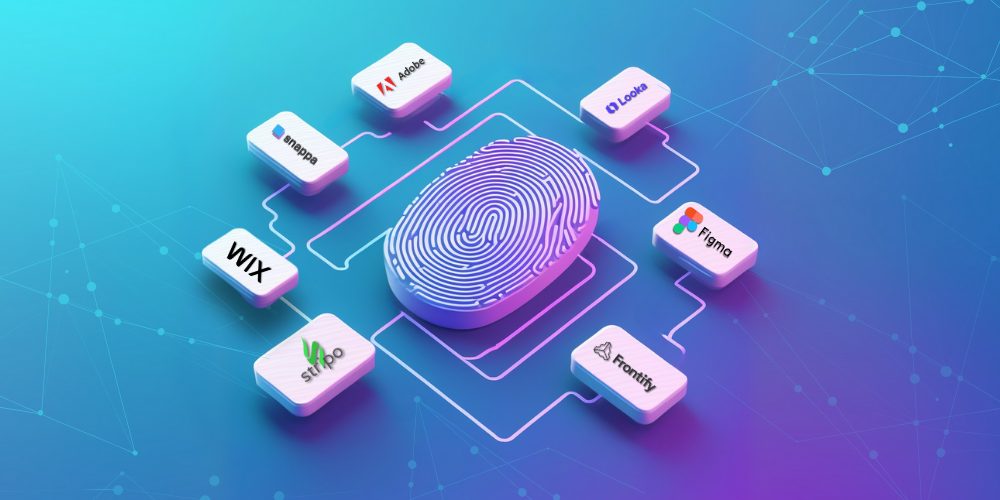
Your digital brand has a few seconds to land with anyone scrolling past it, whether that’s on your website or in their Instagram feed. These five tools cover logo creation, custom design, product design, and fast social content — in roughly the order most startups adopt them.
Canva
Canva is usually the first tool a startup picks up, and for good reason. Its Brand Kit feature locks in your colors, logo, and fonts so every pitch deck, post, or ad pulls from the same source instead of drifting over time. The drag-and-drop interface means non-designers can produce usable assets without waiting on a freelancer for every small request. The free tier covers most early needs; paid plans unlock more brand management controls as your team grows.
Adobe Creative Cloud
Adobe Creative Cloud — including Photoshop, Illustrator, and InDesign — is the step up once templates stop being enough. It’s the industry standard for custom logo design, detailed mockups, and original visual work that nobody else can replicate. The learning curve and cost are both steeper than Canva’s, so most startups bring this in once they’ve outgrown templated design rather than starting here.
Figma
Figma is the standard for startups building a digital product, not just marketing assets. Its real-time collaboration and reusable components keep your app and website visually consistent even when multiple designers and developers are working on the same files at once. If your brand identity needs to survive contact with a product team, this is where it gets enforced.
Snappa
Snappa is built specifically for fast, on-brand social graphics. Its AI-assisted features cut design time for startups that need to post often but don’t have a dedicated designer. The templates are correctly sized per platform, which fixes one of the most common consistency failures: a logo that looks fine on the website and gets awkwardly cropped on Instagram.
Looka
Looka uses AI to generate logo and brand kit options in minutes, which makes it a fast, low-cost starting point for founders with no design background. It’s a reasonable way to get a first version of your visual identity without hiring anyone — but treat the AI output as a draft to refine, not a finished system, especially once you’ve nailed down your actual brand voice and positioning.
These five tools work for Indian startups specifically because they’re affordable, fast to learn, and don’t assume a design team you don’t have yet. Pick based on your stage: Canva and Looka to get a first version live fast, Figma and Adobe Creative Cloud once you have a product and a team to keep on-brand.
Traditional Branding Tools: Consistency Beyond the Screen
Brand consistency has to survive contact with the physical world too — packaging, printed collateral, business cards, and in-person events. These four tools keep that side aligned with everything you’ve built digitally.
Frontify
Frontify centralizes your brand guidebook, logos, colors, and tone under one URL that any team member or external partner can reference. Real-time collaboration, feedback, and approval workflows make it easier to roll out new campaigns or adapt materials for different markets without anyone going off-brand by accident.
Coolors
Coolors generates and adjusts color palettes, then exports them in every format you’ll actually need — PNG, PDF, SVG — for both digital and print use. Its mobile app means a color idea doesn’t have to wait until you’re back at a desktop.
Adobe In Design
Adobe In Design is the standard for professional print materials in India: business cards, brochures, packaging inserts, and anything that needs precise layout and typography. If your startup has any physical product or in-person sales touchpoint, this is where consistent print design actually gets built.
Google Fonts
Google Fonts offers a free library that includes strong support for Indian scripts — Devanagari, Tamil, Bengali, and more — so your typography stays consistent across English and regional-language materials, both online and in print.
Physical materials create impressions that digital ones can’t always match, because they’re tangible. Unboxing, a printed brochure, even a slide deck handed across a table — these moments reinforce your brand message in a way a banner ad doesn’t.
Best Brand-Building Practices for Indian Startups
Picking the right tools only pays off if you use them inside a few non-negotiable habits.
Start with accessible tools, then scale up. Begin with Canva and Coolors to get a working identity fast. As budget and team size grow, move to Adobe Creative Cloud and Figma for tighter creative control and collaboration.
Keep a living brand guidebook. Document logo usage, exact color codes, typography, and tone of voice in one place — then actually update it as your brand evolves. A guidebook nobody updates becomes a guidebook nobody follows.
Balance digital and physical touchpoints. Printed materials and packaging should reinforce the same identity as your website and app. Use Frontify or a shared drive to make sure every touchpoint draws from the same source.
Stay consistent across every channel. A logo that’s blue on the website and a slightly different blue on Instagram isn’t a minor detail — it’s the exact inconsistency that erodes the recognition gains consistent branding is supposed to deliver.
Get the whole team involved. When everyone understands the brand voice and visual rules, they stop needing to ask before posting, designing, or printing something new. Tools like Figma and Frontify make it easy to share feedback and keep everyone aligned without slowing things down.
Why Choose RB2F When You’re Ready to Go Beyond DIY
The tools above will get a startup most of the way there. At some point, usually once you have funding, a growing team, or customers who expect a more polished presence, DIY tools stop being enough on their own. That’s where a dedicated brand partner earns its place.
RB2F runs core branding, rebranding, positioning, and full identity creation as one connected process rather than a handoff between disconnected freelancers. The same team that defines your positioning also builds the visual system, designs your brand collateral and packaging, and carries it through production — DVCs, photoshoots, and motion content — so the identity stays consistent from strategy through execution.
That approach has been used to build and sharpen brand identities for companies including Hinduja Group, Flipkart Ads, Cambay Tiger, and Absorbia, across categories from FMCG to e-commerce. For founders in Mumbai, Pune, or the UAE who’d rather hand off the identity work and focus on the business, RB2F’s Brand Solutions team picks up exactly where the tools in this guide leave off. Get in touch to talk through where your brand stands today.
FAQ
What’s the best free tool to build a startup’s brand identity? Canva is the most commonly used starting point for Indian startups because its free tier includes a Brand Kit feature, templates for most common assets, and no design experience requirement.
How many tools does a startup actually need for branding? Most early-stage startups can cover their full identity with two to three tools: one for design (Canva or Figma), one for color and asset consistency (Coolors or Frontify), and a font library (Google Fonts). Add more only when a specific gap shows up.
Do startups need different tools for digital and print branding? Often yes. Tools built for screens, like Canva and Figma, don’t always handle print specifications — bleed, CMYK color, exact dimensions — as well as Adobe InDesign does. If your startup has any physical product or printed collateral, budget for at least one print-specific tool.
Is it worth paying for branding tools early, or should startups stick to free tiers? Free tiers cover most needs for the first version of a brand identity. It’s usually worth upgrading once you have a dedicated designer, multiple people touching brand assets, or a consistency problem that’s already visible to customers — not before.
Build Smart, Scale Strategically
Your startup’s brand identity is a promise, not just a design choice. With the right tools and the discipline to use them consistently, you can deliver that promise across every platform, screen, and interaction — without waiting until you can afford an agency to do it for you.
Branding tools don’t just save time. They let startups punch above their weight. Whether you’re bootstrapping or scaling fast, matching the right tools to your actual stage is the smartest move you can make right now.
If you’ve taken the DIY route as far as it’ll go and want a team to build the identity properly — strategy, design, and production in one place — talk to RB2F. The right person will get back to you within 24 hours.